
I worked in the BBC from 1998 to 2025, and during that time we witnessed enormous changes in the way broadcasting worked. BBC Local Radio was a perfect microcosm of this, and the documents on this page serve as a reminder of what once was. Although these are largely internal documents, there are no state secrets, and nothing that wasn’t publicly known about. But looking back on them provides a window on the internal thinking and culture within BBC Local Radio at the time.
Please use these resources for educational and cultural purposes – have a giggle in a nostalgic way – after all, you too may have been part of this once! But please don’t seek to weaponise these documents in unhelpful discourse. There’s no going back, and yes, rose tinted specs were very much in fashion. Most of all, please use this resource as a factual reference point to the BBC at a particular moment in it’s rich history.
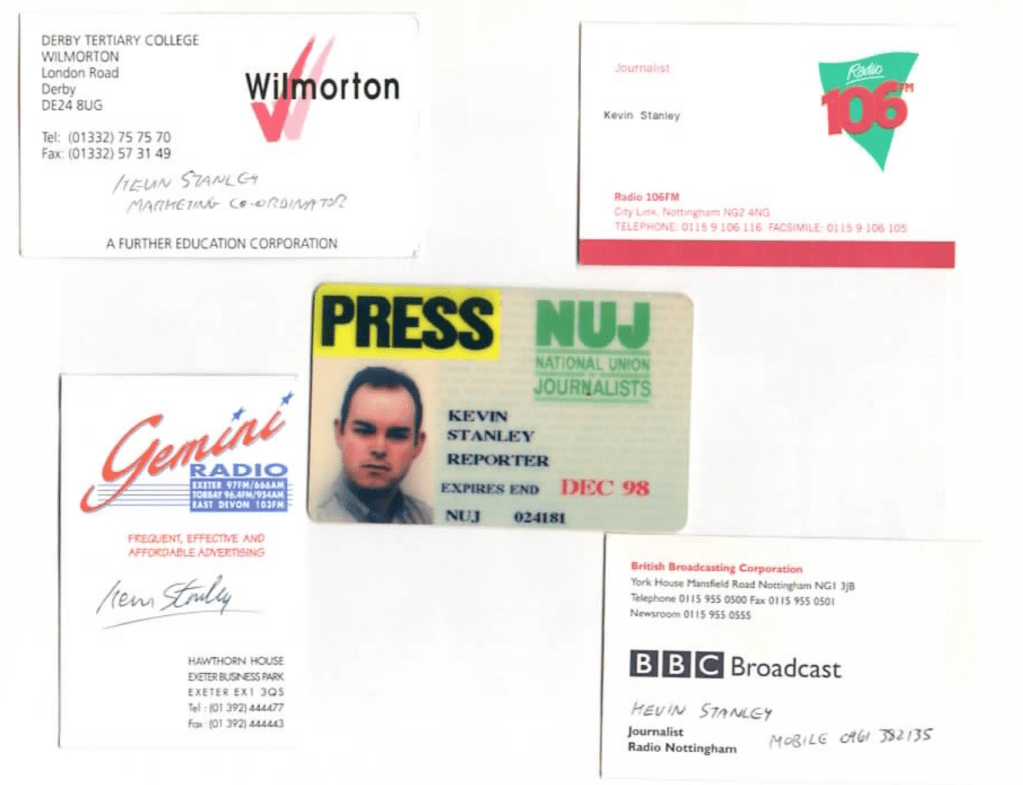
A career in five cards
As I enter the world of freelancing and consultancy work, my CV is very quickly getting very long. But for over 30 years I was lucky to hold down just four stable jobs. The decision to leave each one was entirely mine. These business cards are complemented by the ID I’ll never leave home without – my NUJ Press Card – although I did eventually have to give up this photo.
Posh dos and lots of booze
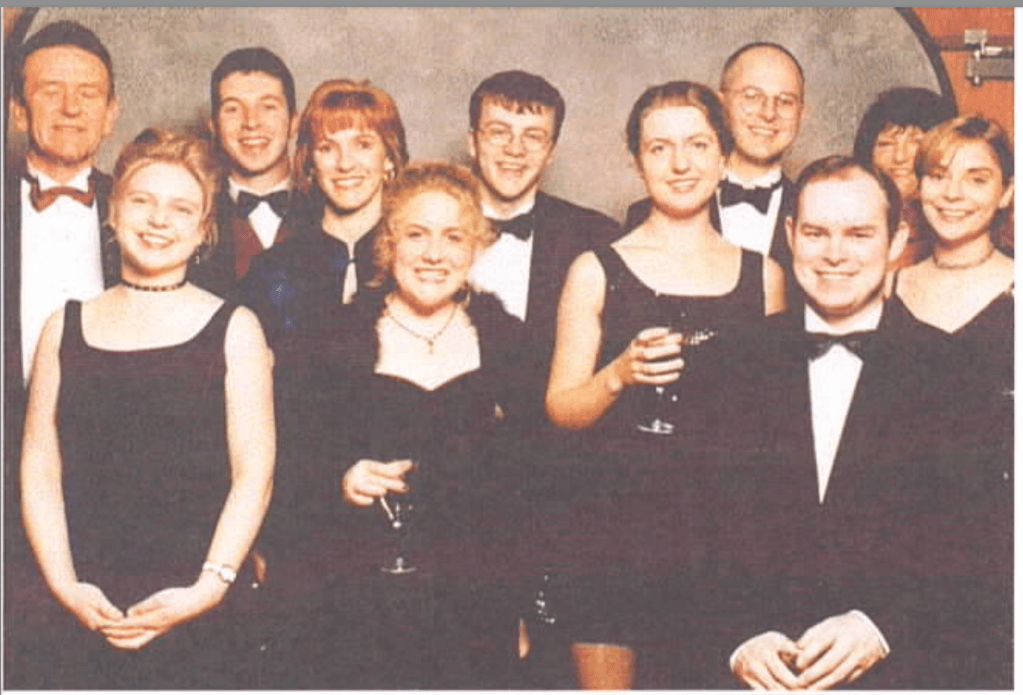
In the Nineties, there were several annual events that you just ahd to attend. One was the East Midlands Media Ball, a charity fundraiser that was basically an excuse to get completely hammered at the expense of the company. We paid for our tickets at Radio 106FM, the region’s fledgling commercial station. This photo is less of a who’s who and more of a “who are you…”. I jest – this lot were the best.
Left to right are Ken Warbuton, Sarah Tempest, Mike Young, Liz Jepson, Pip Watts, Giles McMullen, Katie Breathwick, Andy Hitchcock, yours truly, not sure but I want to say Mrs Ken and Liz Curtis.
Induction notes from 1998
Everything in the BBC had an instruction manual, or at least a hefty ream of memos spelling out exactly how things should be. In this document, you’ll see a guide to BBC Radio Nottingham’s news bulletins in 1998. Two remarkable things spring to mind – one, the length of the bulletins and the audio within – no more than 30 seconds for a clip! Second, the fact that so late in the game, the BBC was only now starting to realise the importance of branding in bulletins and interviews. It seems odd now that newsreaders and presenters needed to be told to mention the name of the station. That’s second nature to many now, but at the time it was alien to some.
The second part of the document deals with how to use the Radio Car – the old fashioned estate vehicle with a huge mast on top of it. Lethal in the wrong hands. Finally, a Job Description for what were then called “Bi Media Journalists” who were – shock horror – expected to work for both Radio and Television. No online journalism here, because the Internet hadn’t really been invented, and what we now know as the BBC News website was yet to be born.
Project Bullseye – the Dave and Sue story
In the early 2000s, the BBC embarked on a huge amount of research to identify the target audience for Local Radio. The network was a jumble of programmes and formats – and while an all speech, news led breakfast show was commonplace, nobody quite seemed to know who it was aimed at.
The result – famously at the time – was Dave and Sue, our ideal listener. They were actually real people – the relatives of a Local Radio Editor – who were heading towards their retirement years but had a young outlook on life. Audience research has often been a meticulous science, but Project Bullseye took it to a whole new level. Looking back on it now, some of the fine detail almost appears to bne micro-managing the expectations of the radio station format. But if you’re going to define a target audience, you may as well do it comprehensively.
Keeping it on brand
At about the same time as Dave and Sue, a slow dawn of corporate branding engulfed BBC Local Radio. Up until this point, each station had its own distinctive logo, often referencing local landmarks or landscapes of the places served. While they were lovely – and kept the car sticker and mug printing business alive – they were also disjointed. The red and gold branding guidelines changed all that. A story goes that the then Director General, Greg Dyke, was on a visit to Radio Suffolk : looking at the seagull, coastal and blue water logo in reception, he commented how nice it looked, and asked why all local radio stations didn’t have one. “Well, the thing is, you banned them,” reportedly came the answer.
In a bid to retain elements of localness, place names were incorporated into the branding. This was certainly a good way of showing that the radio station was connecting with all of the communities in its patch. Though it did have drawback – when certain place names were painted on the sides of BBC cars, they could sometimes take on a whole new meaning if a door was open. There are plenty of comical examples. I offer Scunthorpe as Exhibit A – though you will have to work out the joke for yourself.
Poster boy and centrefold
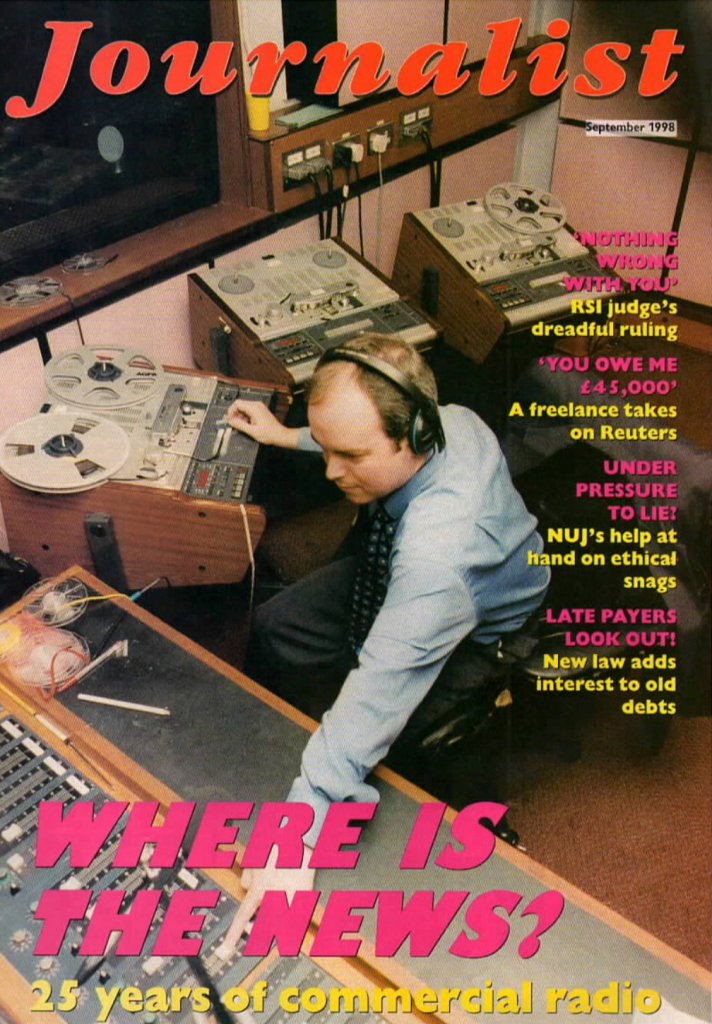
Leaving commercial radio for the BBC is a fairly commonplace career move, but for some reason the National Union of Journalists were keen for me to write an article about the contrast between the two sectors. I had to get permission from the BBC press office – and there was a bit of local noise since one of the managers who hired me was the partner of the News Editor of the station I was leaving. I thought nothin of it, until the Journalist magazine was published – and decided to put me on the front page. The sub heading – referring to commercial radio when I’m sat in a BBC studio – was not universally weclomed.
“The worst union rep I’ve ever encountered”
I won’t attribute that quote, but you can’t please everyone all the time. However, by the turn of the millennium I became more vocal in union circles, serving on the NUJ’s National Executive Council and being the Nottingham Branch Secretary. The Branch had been recently revived (by myself and Diana Peasey) and was getting into all kinds of scrapes. These two articles from The Journalist Magazine sum up the varied work – a mediation session between indy producers October Films and Nottingham City Council, and a social visit to Nottingham’s caves.
On the picket line
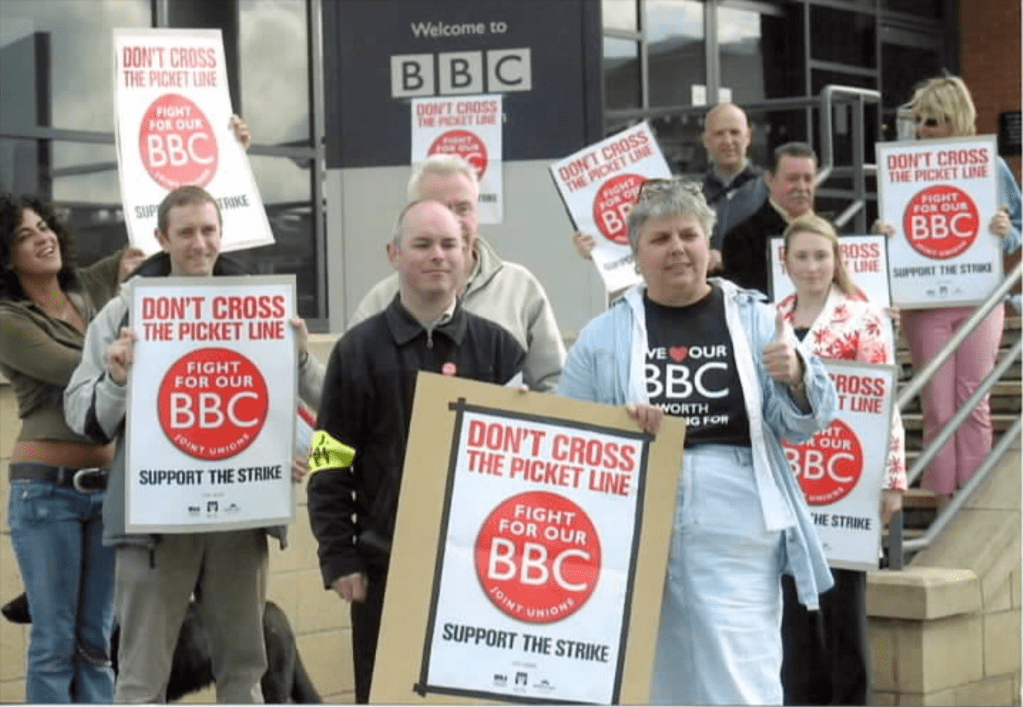
Despite the stereotypes, the NUJ at the BBC rarely went on strike. There were just three in my time – this one was in 2005 and was a joint walkout with our colleagues from Bectu and Amicus, over proposals to cut 4,000 jobs.
 kevinstanley.blog